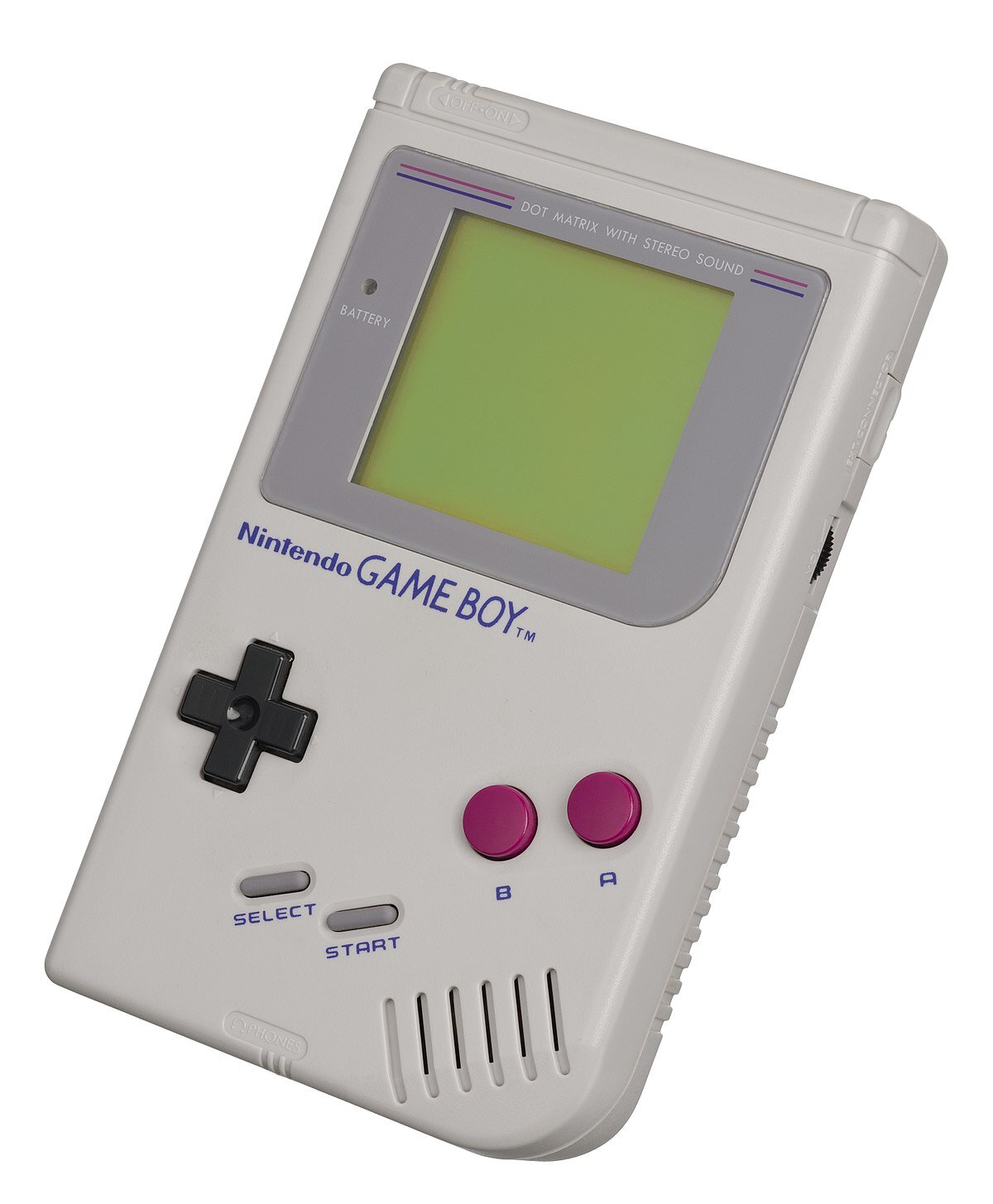
With nearly 120,000,000 units sold, the original Nintendo Game Boy was a success on a scale few other products of any category ever even approach. Released in 1989, the Game Boy was a global smash hit, and it remains the image in many peoples mind any time "portable video games" are mentioned. Technically inferior to many would-be usurpers, the Game Boy's low-res display, limited audio capabilities and chunky design somehow made the system more endearing to gamers. Often sold with a copy of the addicting puzzle game "Tetris" included, the Game Boy was eventually home to a long list of all-time-great games and characters, including Pokemon, Mario, Zelda, Kirby and many more. The Retro Roadshow is pleased to offer visitors the opportunity to play on several working examples of the original Game Boy.
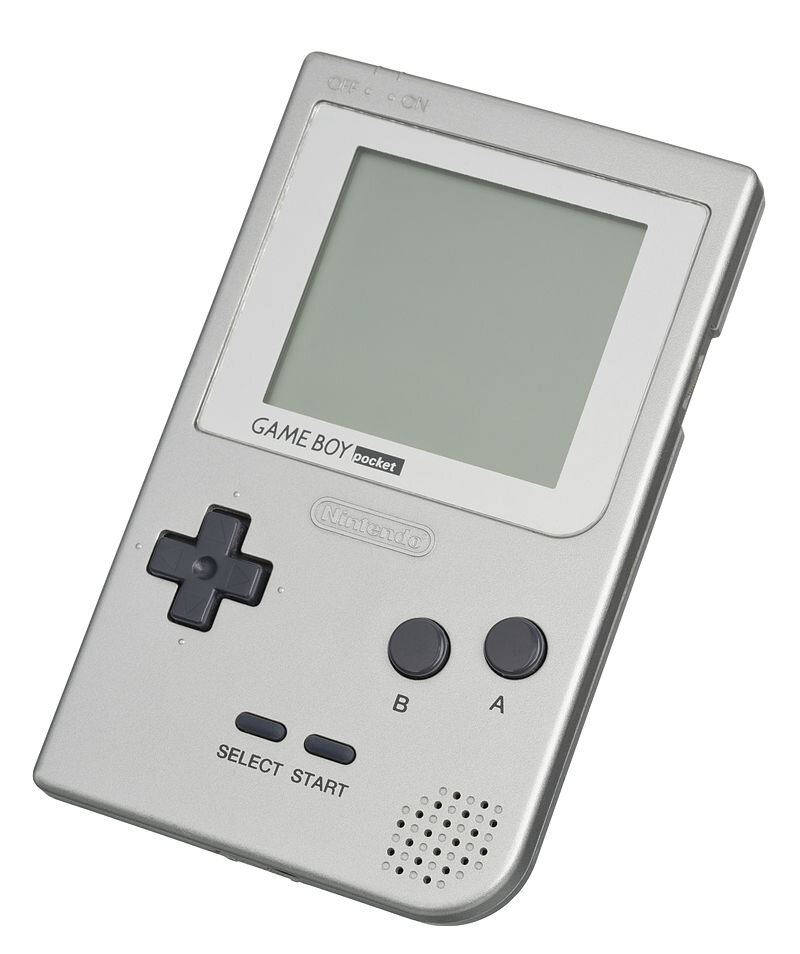
Released 6 years after the original Game Boy, the Game Boy Pocket condensed the features and functionality of the original handheld into a smaller, lighter, more-portable form-factor. Not content to just replicate the original Game Boy, the Pocket offered some enhancements, such as longer battery life and a much-improved screen, all while maintaining compatibility with the 1,000+ commercially-released Game Boy game cartridges.
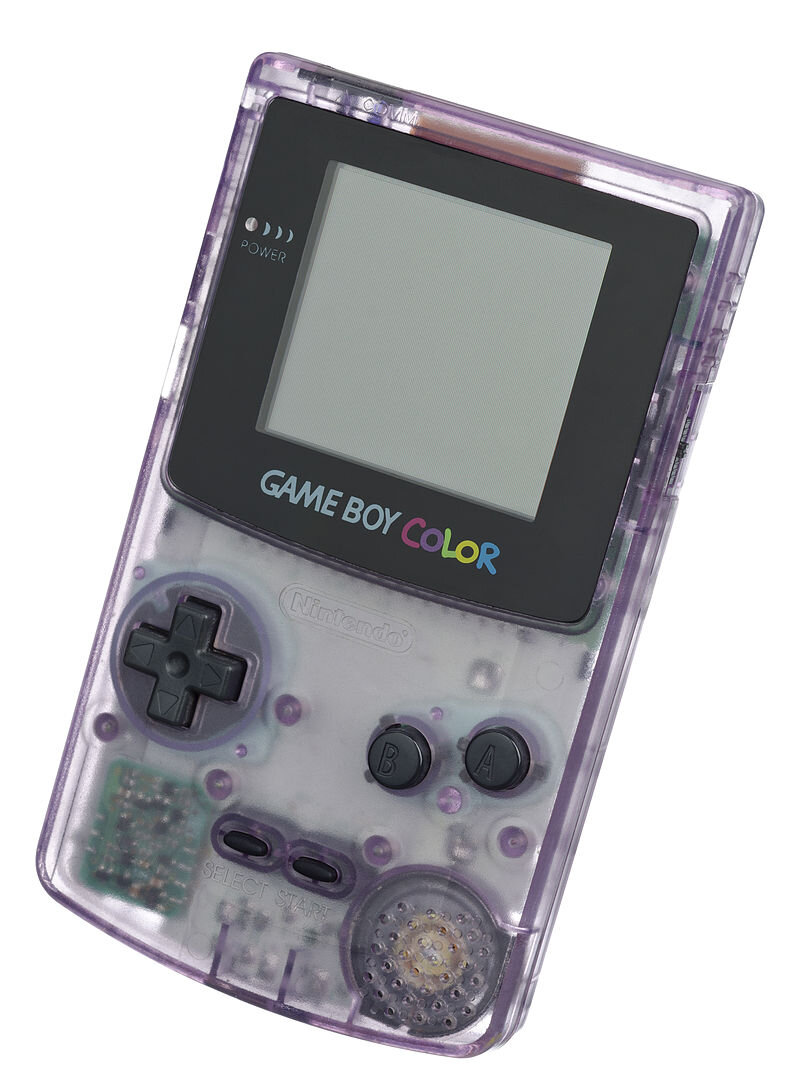
Further refining the design of the original Game Boy, the Game Boy Color brought a more powerful CPU, improved audio, and (most notably) a full-color display, all while maintaining nearly perfect backwards-compatibility with the enormous library of existing (non-Color) Game Boy games. With a library of nearly 600 Color-specific games like Pokemon Silver, Gold and Crystal, Metal Gear Solid, Harvest Moon, and Wario Land, the Game Boy Color remains a delight to play with.
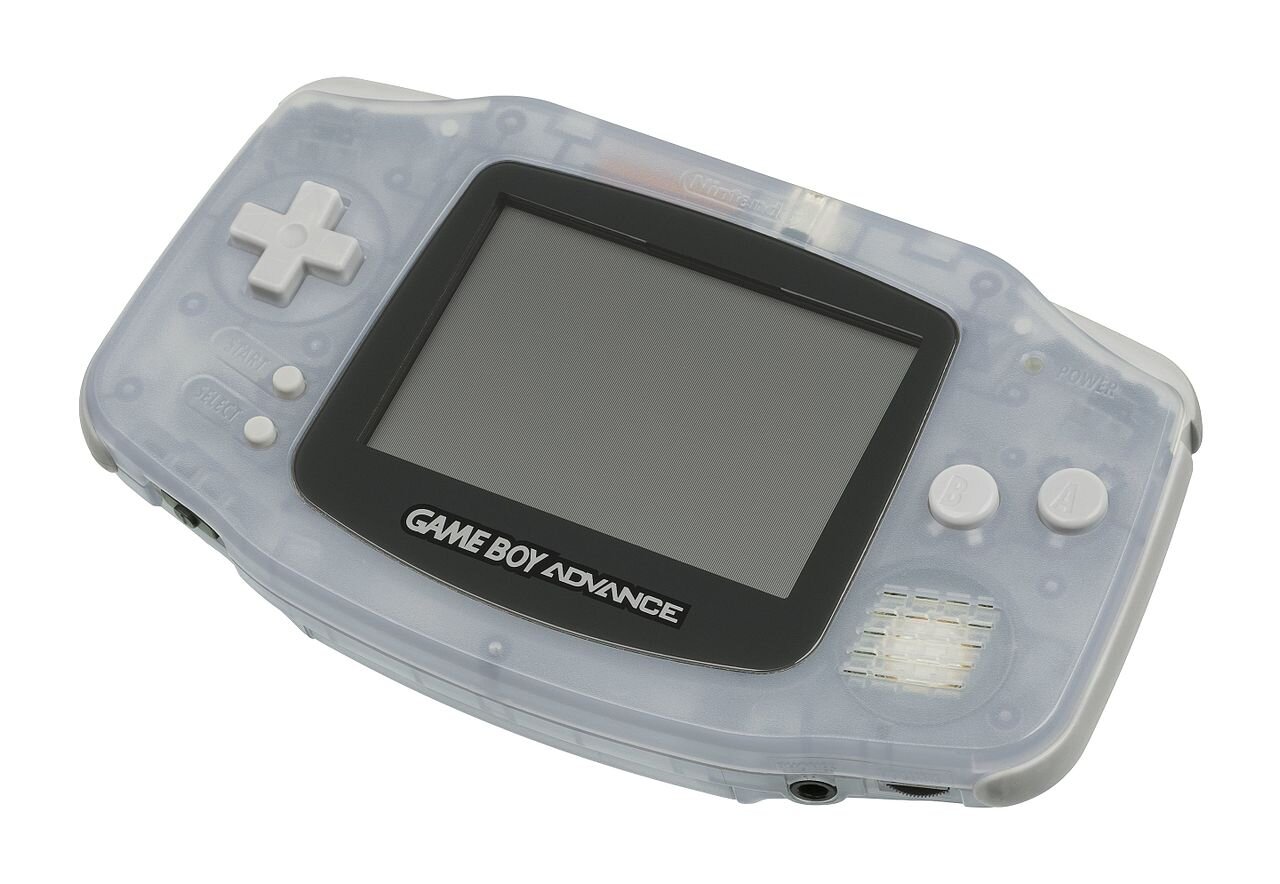
The final entry in the original Game Boy line, the Game Boy Advance lived up to its name: a 32-bit CPU, full-color display, high-resolution audio, additional control buttons and nearly flawless backwards-compatibility with existing Game Boy games. The "GBA" was a pocket-sized powerhouse, showing for the first time that Nintendo could incorporate powerful hardware and their deep catalog of classic gaming characters and franchises to deliver an unparalleled portable gaming experience. The Retro Roadshow is excited to share several examples of each revision of the Game Boy Advance, along with a number of the best games available for the system.
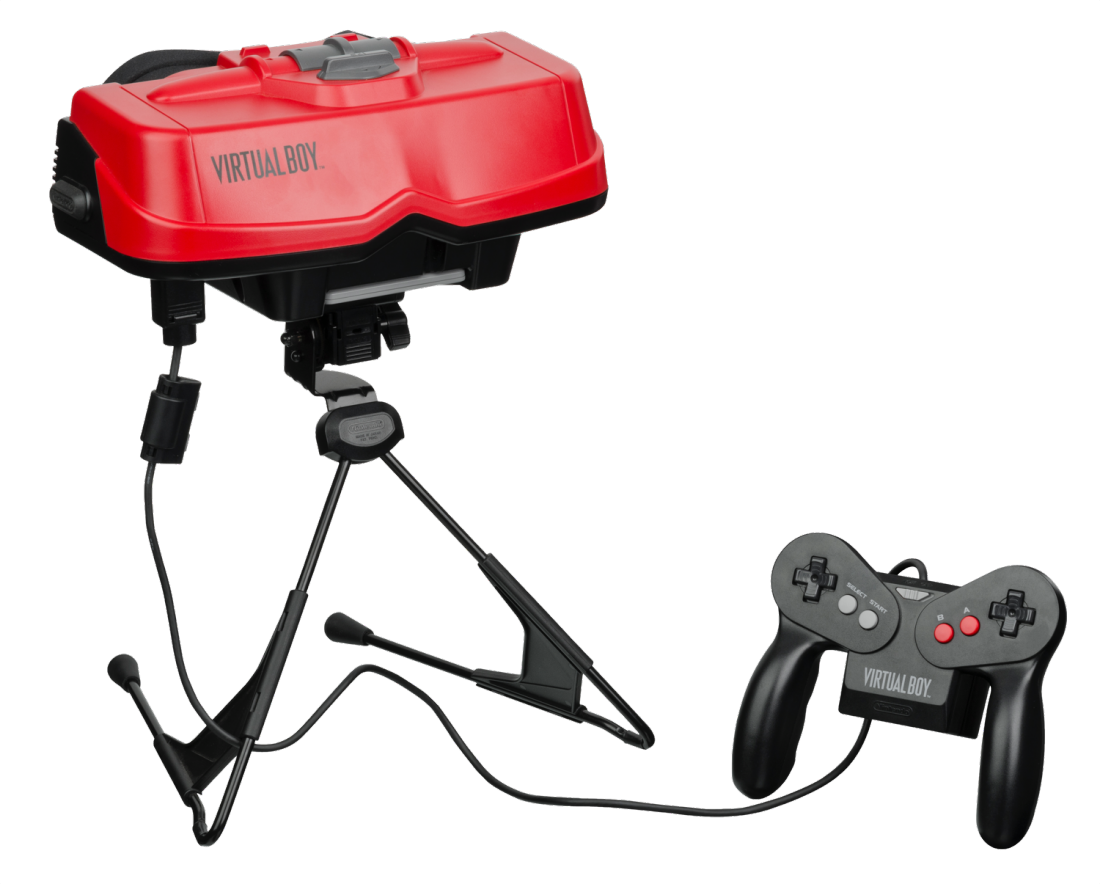
The Virtual Boy is perhaps best remembered as the ultimate example of Nintendo's willingness to try some *very* strange things in pursuit of new ways to play. Built around an innovative stereoscopic 3D display, the Virtual Boy produces graphics with impressive depth, with some excellent games like Mario's Tennis, Red Alarm, 3D Tetris and Teleroboxer. The Virtual Boy's place in Nintendo's lineup was never clear: it was battery-powered like a portable system, but like a home console, it needed to be set on a stationary flat surface, and it was notorious for inducing severe headaches in users after short sessions. The Virtual Boy was retired from the market in less than a year. The Retro Roadshow is proud to have a fully-functional Virtual Boy for our attendees to experience, and we promise to have a bottle of aspirin available if needed.
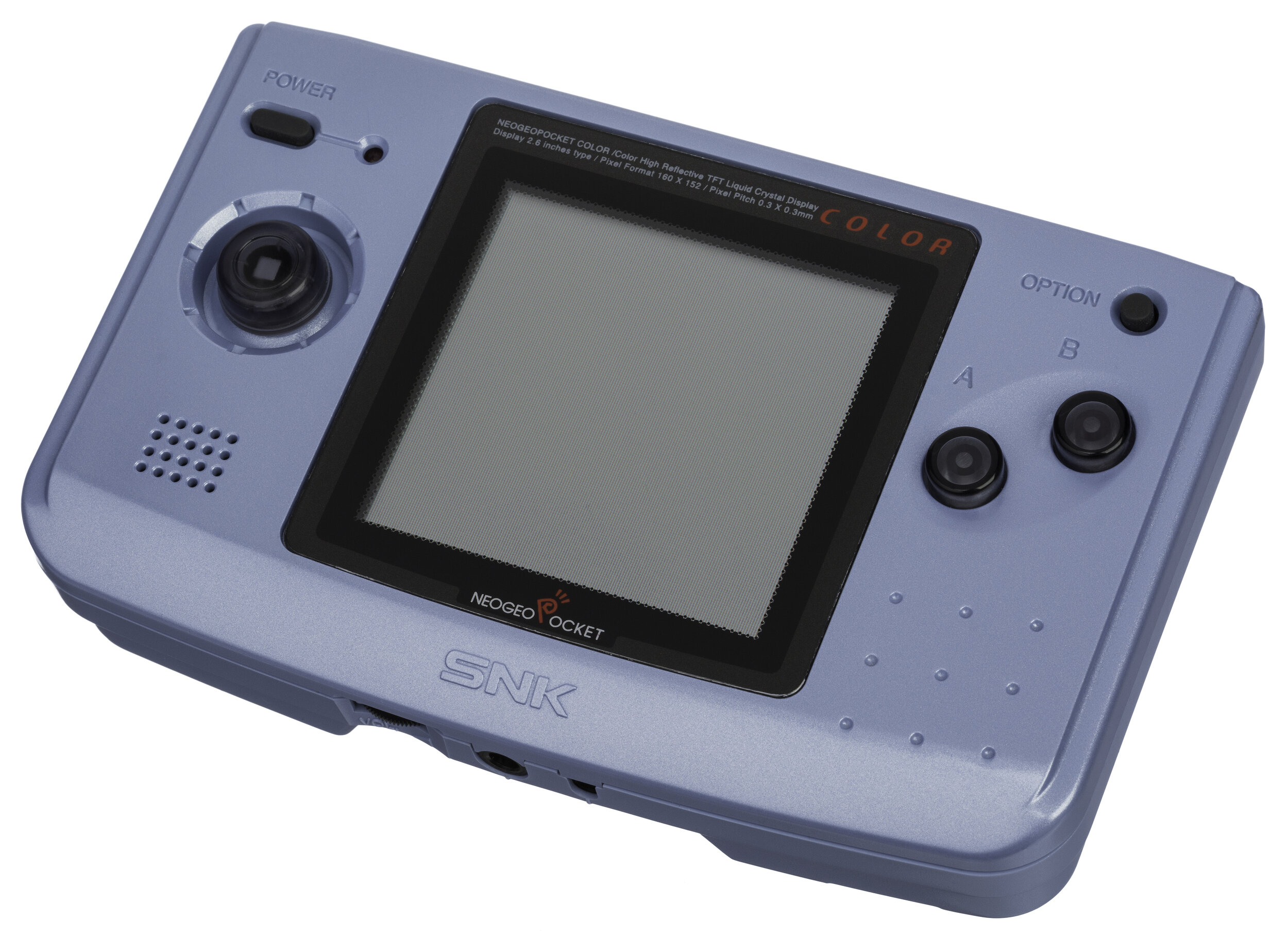
Best known for their long series of highly-successful Neo Geo arcade cabinets, SNK sought to attack Nintendo's Game Boy head-on with the Neo Geo Pocket Color. Sporting high-resolution graphics, high-quality sound, and a wonderful "clicky" joystick, the "NGPC" is home to a small but vibrant collection of fantastic games. SNK's expertise in fighting games is heavily reflected on the NGPC, with titles such as SNK vs. Capcom: The Match of the Millennium, King of Fighters R-2, and other quality arcade titles derived from SNK's successful arcade line. Furthermore, some excellent non-fighting-game titles were available exclusively on this system, such as Biomotor Unitron (a role-playing game clearly influenced by Nintendo's Pokemon series), Sonic The Hedgehog Pocket Adventure, and Puzzle Bobble Mini, an incredibly addicting puzzle game. The Retro Roadshow is delighted to expose our visitors to this little-known handheld system.
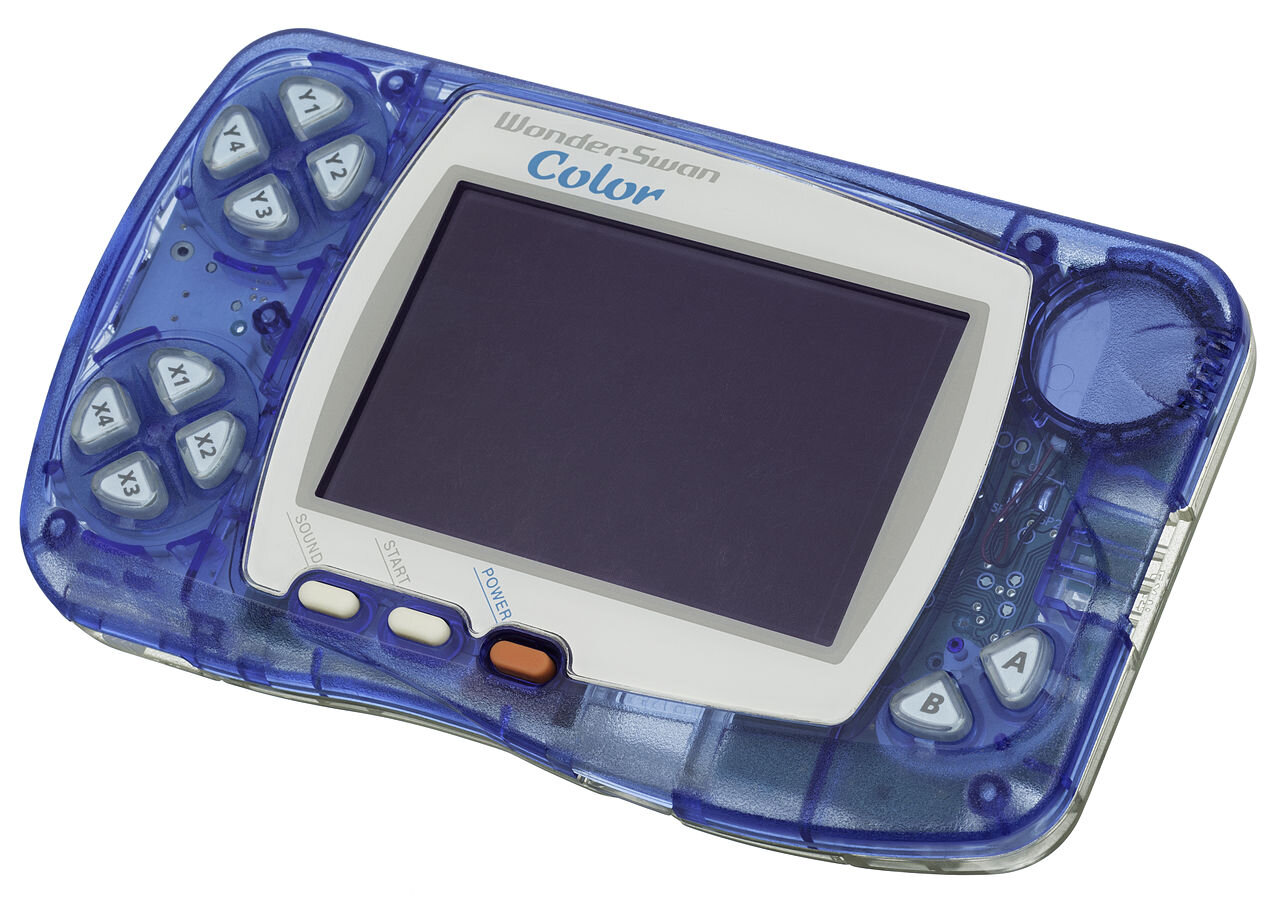
The Bandai WonderSwan (and later, WonderSwan Color) was a handheld system designed by Gunpei Yokoi, creator of the original Nintendo Game Boy. Powered by a 16-bit CPU, the WonderSwan cost less and featured and longer battery life than Nintendo's Game Boy Color and SNK's Neo Geo Pocket Color. The WonderSwan is playable both vertically and horizontally, and features a unique library of games, including numerous anime titles, along with games from developers such as Squaresoft, Namco and Capcom. The Retro Roadshow is delighted to give attendees the chance to experience this little-known handheld system for themselves.
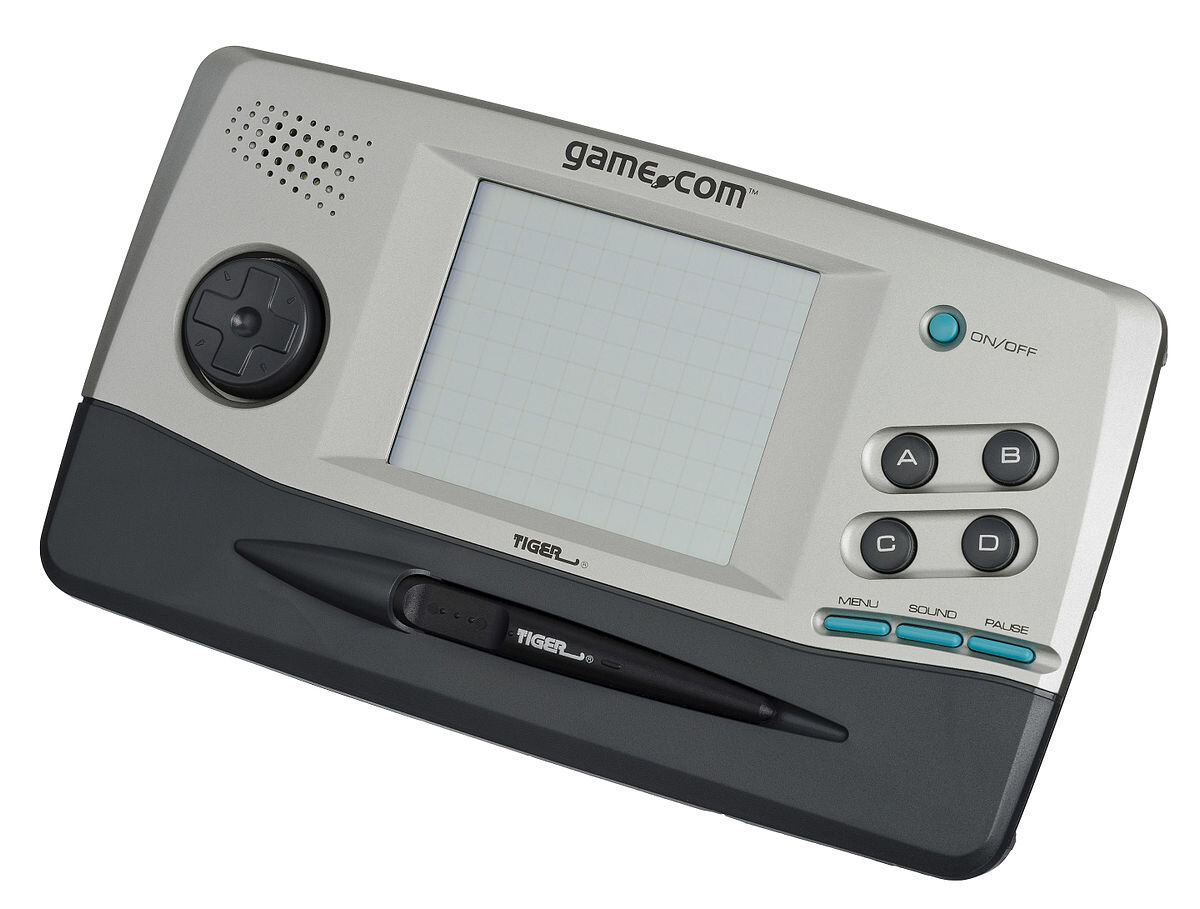
Some portable game systems were wildly popular, selling millions of units. Some portable game systems were less successful but still earned a loyal following and die-hard fans. And then there's the Tiger Game.com, one of the most wretched devices ever inflicted upon the public. Originally envisioned as a sort of hybrid gaming system / internet communicator, the Game.com eventually arrived on the market with a surge of hype. Unfortunately, potential buyers were presented with an overtly-insulting ad campaign with the remarkable tagline, "it plays more games than you idiots have brain cells." While it did have some noteworthy technical capabilities for the era (a stylus-driven touch screen, dual game slots, rudimentary dial-up internet access for sending/receiving email), the blurry display, poor performance, and shocking lack of worthwhile game titles quickly consigned the Game.com to the dustbin of history. The Retro Roadshow has the dubious honor of offering visitors the opportunity to experience a Game.com for themselves, though we advise that any such exposure be quickly followed by a few minutes playing on literally any other system.
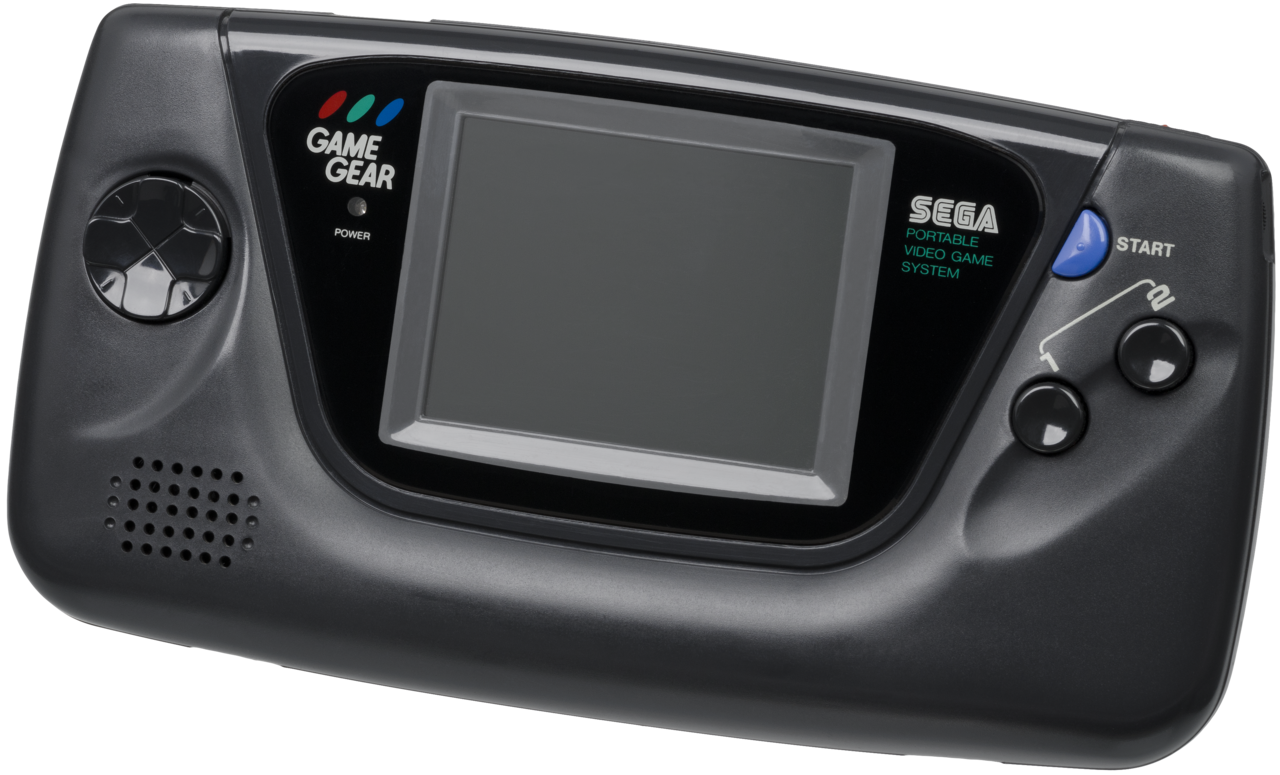
The Nintendo Game Boy was challenged by a number of competitors, all of which tried (and failed) to take its place as the best-selling console of all time. While none of these competitors ever approached the Game Boy's level of success, the Sega Game Gear was the most successful of these alternate systems. Sega's handheld beat the Game Boy's specs in nearly every possible way: a larger, full-color screen, faster CPU, richer audio, and more. The Game Gear also offered a library of fun games featuring characters and brands like Sonic, Shinobi, Batman, Disney and more. The Game Gear is fondly remembered for its chunky design, battery-devouring hardware, and typically-aggressive Sega marketing campaign. The Retro Roadshow is happy to offer visitors the chance to experience the Game Gear in all its glory.

Released in 2003, the Tapwave Zodiac is an incredible “what if” story: a brilliant, forward-thinking device from an ambitious Silicon Valley startup, which was soon utterly crushed Nintendo. Founded by two former Palm execs, Tapwave designed the Zodiac to be half handheld computer, half high-end portable gaming system. Running a modified version of PalmOS and capable of playing games from cartridges or downloaded directly from the Internet, the Zodiac was explicitly marketed as a more “grown up” alternative to Nintendo’s Game Boy. Unfortunately for Tapwave, their powerful hardware, positive reviews, and a small but compelling catalog of games simply could not even dent Nintendo’s stranglehold on handheld gaming. Tapwave vanished after barely two years, leaving a small number of surviving Zodiac devices as a reminder of what might have been.
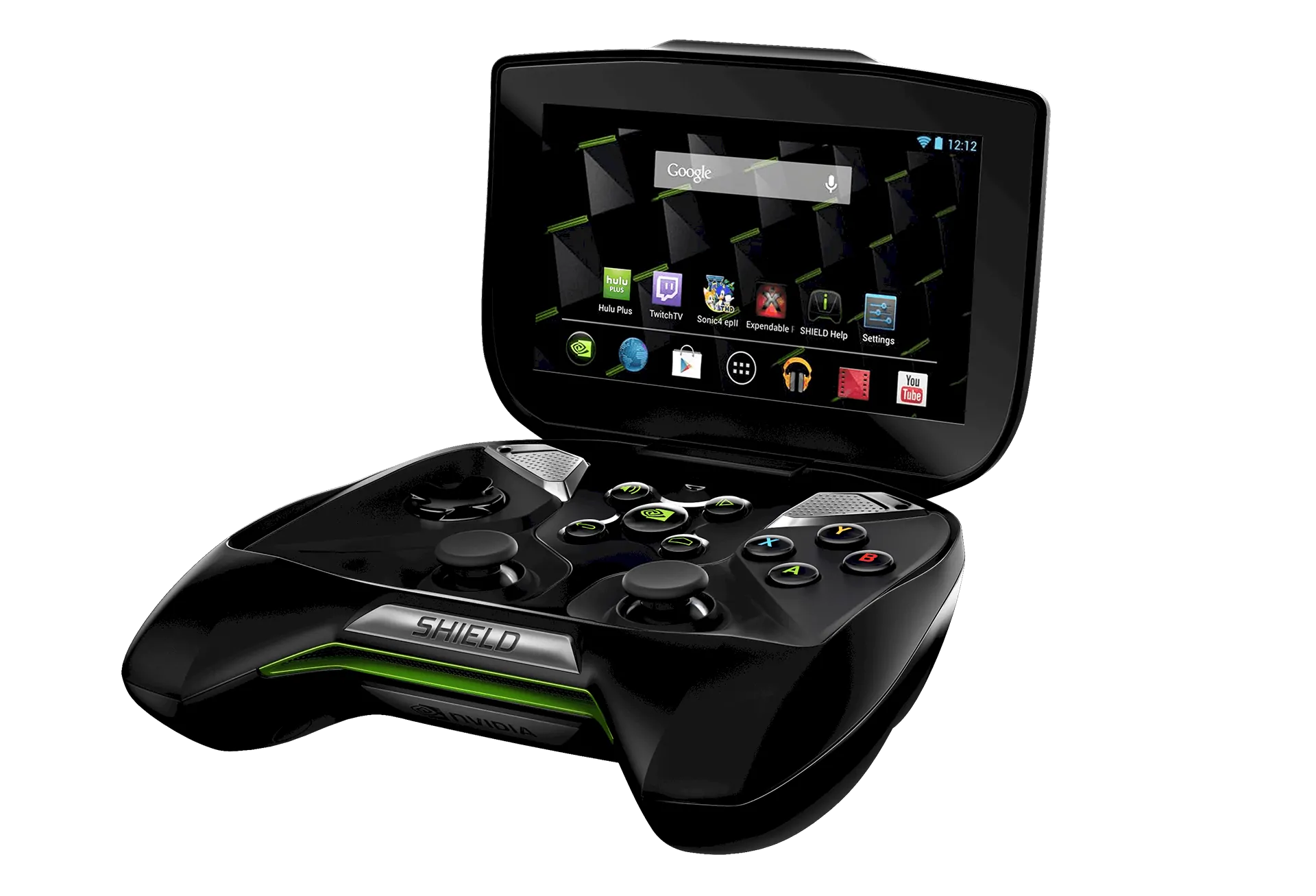
This is the NVIDIA Shield Portable from 2013. is an Android-powered portable gaming console that resembles a full-size controller. The ‘cover’ contains a flip-up 5" display, and the system is powered by a powerful ARM “Cortex” CPU running at 1.9GHz. Nvidia marketed the Shield Portable as a way to stream games from a desktop PC over a home WiFi network, but that’s not necessarily what the device ultimately became known for. Instead, the Shield Portable is one of the most powerful portable emulation systems ever released. Our Shield Portable is loaded with emulators and classic games, with hundreds of titles for various Atari consoles, vintage Nintendo consoles and even later systems like the PlayStation Portable, PlayStation 1 and Sega Dreamcast. The Nvidia Shield Portable may have missed the mark as a game-streaming device, but as a pocket-sized emulation library, it can’t be beat. The Retro Roadshow is pleased to offer the opportunity to experience this unique portable gaming powerhouse.
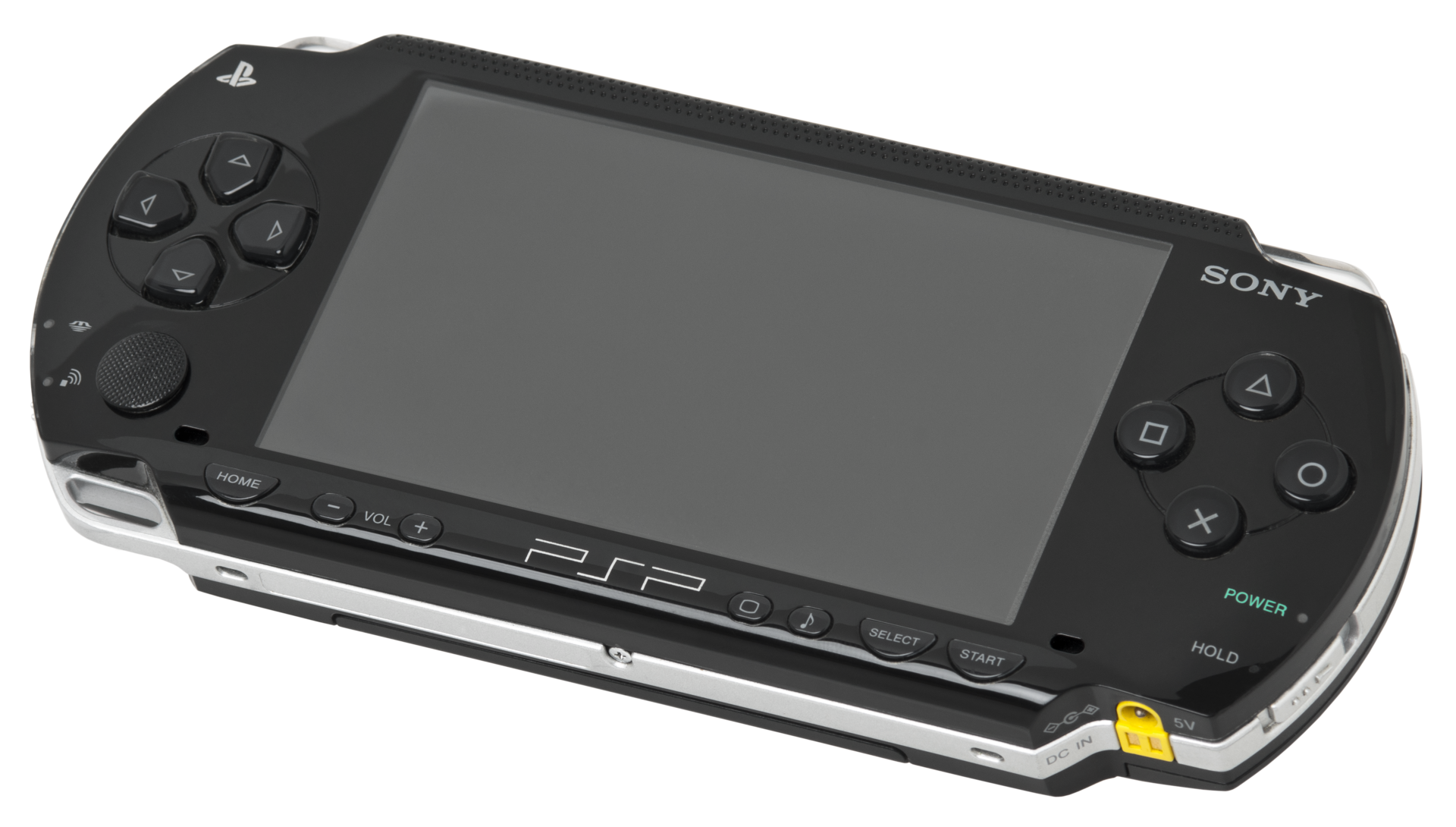
With the PlayStation Portable ("PSP"), Sony made their long-awaited entry into the handheld gaming market. Boasting powerful specs comparable to a PlayStation 2, the PSP offered a truly console-quality experience that fit in a pocket.
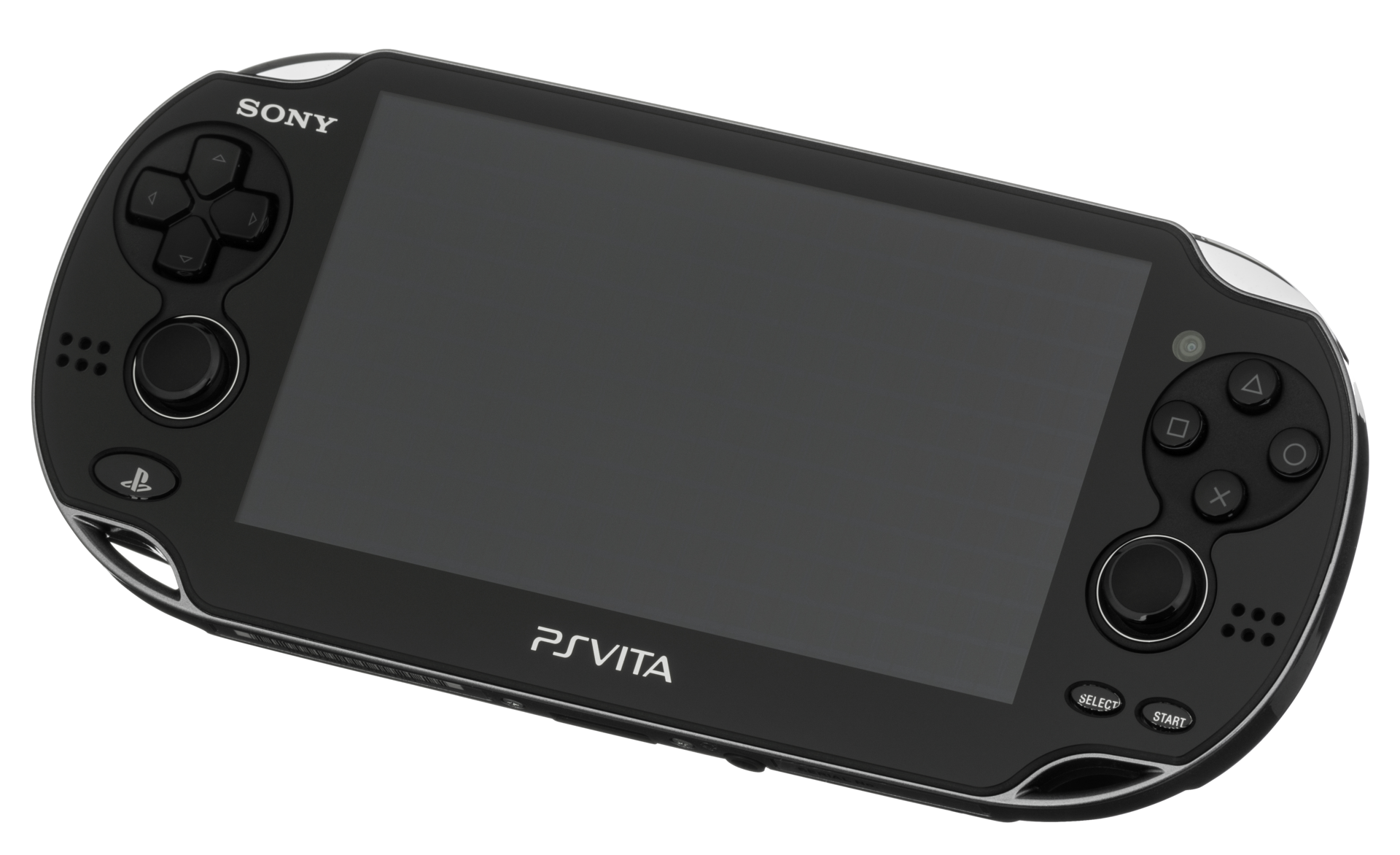
With the PS Vita, Sony attempted to address some of the limitations of the PlayStation Portable. The Vita features a gorgeous touch-sensitive display, dual joysticks, and some models even offered cellular connectivity for online multiplayer gaming on the go. Unfortunately, Sony never seemed to quite understand what the Vita was intended to do in their product line, and it eventually faded away despite a vocal fan base. Nevertheless, the Vita offers an astonishing library of fantastic games, and The Retro Roadshow is delighted to share this unique system with our attendees.